Unlocking the Power of 3D Printers: A Complete Guide to the Future of Creation
3D printing, or additive manufacturing, is no longer just a futuristic concept—it is a powerful tool changing how we design, build, and innovate across multiple industries. At its core, 3D printing involves creating three-dimensional objects from digital files by laying down successive layers of material. What once was confined to industrial labs is now found in schools, homes, and startups around the world.
From rapid prototyping in engineering to customized healthcare solutions and artistic creations, 3D printing technology has created a new realm of possibilities. As costs have dropped and machines have become more accessible, even hobbyists can bring their digital ideas to life.
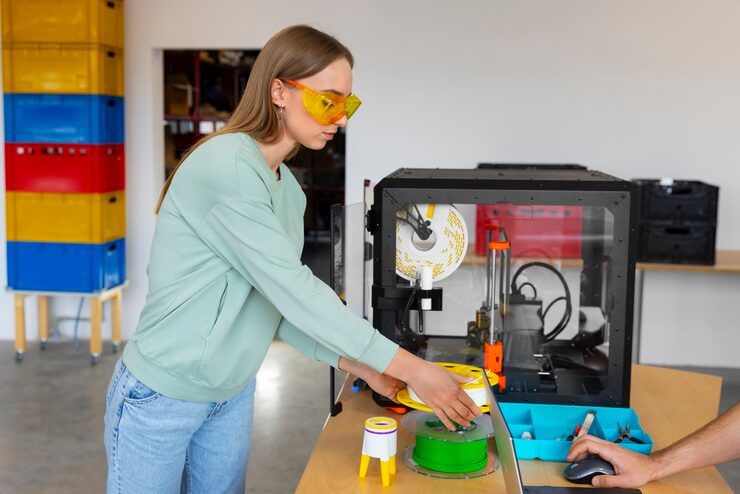
Why 3D Printing Matters in Today’s World
3D printing is revolutionizing production across sectors:
-
Manufacturing and Prototyping: It allows faster, cheaper prototyping, reducing development time and material waste.
-
Medical Advancements: Custom prosthetics, dental implants, and even bioprinted tissues are transforming patient care.
-
Education and Learning: Schools and universities use 3D printers for hands-on learning in STEM, design, and engineering.
-
Environmental Benefits: On-demand printing reduces overproduction, packaging waste, and shipping emissions.
-
Consumer Customization: From jewelry to footwear, consumers can now personalize products to their exact specifications.
This technology affects designers, engineers, medical professionals, educators, and even consumers. It addresses problems like long production cycles, mass standardization, and high manufacturing costs. By enabling decentralized production, it offers a more sustainable and creative future.
Recent Developments in 3D Printing (2024–2025)
The 3D printing industry has seen significant innovation over the past year:
-
Sustainable Materials on the Rise (2024): Manufacturers are increasingly using biodegradable filaments, recycled plastics, and bio-based resins to align with global sustainability goals.
-
Advancements in Metal Printing: More accessible metal 3D printers are enabling stronger, durable parts in automotive and aerospace industries.
-
Bioprinting Milestones: In early 2025, research institutions reported success with printing functional skin tissue for grafts, showing real promise in regenerative medicine.
-
AI Integration: AI-powered software is being used to optimize design files automatically, reducing errors and improving efficiency.
-
Desktop Industrial Printers: A new category of high-performance desktop 3D printers is bridging the gap between professional quality and consumer accessibility.
According to a 2025 market report, the global 3D printing market is projected to grow to over $60 billion by 2030, driven by innovation, cost reductions, and new use cases.
Legal Regulations and Government Programs
3D printing intersects with a range of legal and regulatory concerns:
-
Intellectual Property (IP): As 3D printing becomes more widespread, copyright and patent issues surrounding shared or scanned designs have become more prominent. Designers are advised to use or license files legally.
-
Safety Standards: Depending on the country, 3D printed medical devices, tools, or parts must meet safety certifications (e.g., FDA in the U.S., CE in Europe).
-
Firearms and Security: Many jurisdictions have laws restricting or prohibiting the 3D printing of weapons or weapon components.
-
Educational Initiatives: Several countries—including Canada, Japan, and Germany—have launched funding programs to integrate 3D printing into public school STEM curricula.
-
Export and Trade Restrictions: Certain countries regulate the export of high-end 3D printing technologies due to national security concerns.
Governments are also funding research grants and local maker hubs to foster innovation and skill development in the field.
Tools and Resources for 3D Printing
Whether you're a beginner or an experienced maker, several tools and platforms can help you get started or expand your capabilities:
Design Software
-
Tinkercad: User-friendly and great for beginners
-
Fusion 360: Advanced CAD tool with parametric design features
-
Blender: Free, open-source modeling software, good for artistic designs
Model Libraries
-
Thingiverse: Vast library of free-to-download 3D print models
-
Cults3D: Offers both free and paid design files
-
MyMiniFactory: Focused on quality-checked models from creators
Printer Selection Tools
| Printer Type | Ideal For | Example Brands |
|---|---|---|
| FDM (Fused Deposition) | Beginners, general use | Creality, Prusa |
| SLA (Resin-based) | High-detail printing | Anycubic, Formlabs |
| SLS (Laser Sintering) | Industrial prototyping | EOS, Sinterit |
Slicing Software
-
Cura: Open-source, customizable slicer from Ultimaker
-
PrusaSlicer: Reliable for both FDM and resin printers
-
Lychee Slicer: Popular for resin prints, with an intuitive interface
Online Communities
-
Reddit r/3Dprinting
-
Facebook 3D Printing Groups
-
YouTube Channels (e.g., Maker’s Muse, 3D Printing Nerd)
These tools and platforms help reduce the learning curve and enable creators to find support and inspiration.
Frequently Asked Questions (FAQs)
What materials can be used in 3D printing?
Common materials include PLA, ABS, PETG (plastics), resins (for SLA printers), and metal powders. Biodegradable and recycled options are also available.
Is 3D printing safe to use at home?
Yes, when used responsibly. Ensure good ventilation, avoid touching hot components, and monitor prints to prevent overheating or fire risk.
How long does a 3D print take?
Printing time depends on the object’s size, layer height, and printer speed. Small items may take under an hour, while complex models can take several days.
Do I need to know CAD to use a 3D printer?
Not necessarily. You can download ready-made models from websites like Thingiverse or use beginner-friendly design tools like Tinkercad.
Is 3D printing expensive?
Entry-level FDM printers start around $200–$300. Filaments cost about $20–$30 per kilogram. Costs increase with advanced materials and printers, but many hobbyists find it affordable.
Conclusion
3D printing is more than just a hobby or industrial tool—it represents a shift in how we approach manufacturing, learning, and problem-solving. As accessibility increases and new applications emerge, 3D printers will likely become as common as paper printers in homes and workplaces.
By understanding the fundamentals, keeping up with new developments, and using the right tools, anyone can begin exploring the possibilities of digital creation. Whether you're printing parts, art, or medical tools, the future of creation is literally being built—one layer at a time.